
Complete Guide to Coal Briquette Production:Raw Materials, Process, and Equipment
What Are Coal Briquettes?
Coal briquettes are solid fuel blocks made from coal powder, slag, or biomass (such as charcoal or straw). During production, binders (such as starch or clay) are usually added, or the briquettes can be formed directly using a high-pressure coal briquette machine.
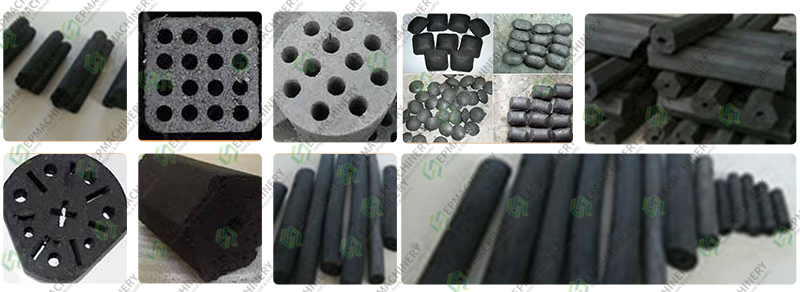
Coal briquettes come in various shapes and sizes and can also be customized.
Why Choose Coal Briquettes?
Direct combustion of coal powder and slag produces a large amount of dust. Compressed coal briquettes are generally 20%-40% more expensive than loose coal.
Waste from coal mines, steel plants, and charcoal processing—such as coal gangue, coal dust, and carbon residues—can be converted into high-value coal briquettes, reducing dust and air pollution while complying with global energy transition and environmental policies. This makes it a high-potential industrial project.
Advantages Compared with Loose Coal
| Indicator | Coal Briquette | Loose Coal |
|---|---|---|
| Heat Utilization | 85%-90% (complete combustion) | 60%-70% (prone to slag and powder loss) |
| Transport Cost | Low (compact, no loss) | High (easily spills, requires dust control) |
| Storage Safety | Moisture-resistant, low risk of spontaneous combustion (high density) | Prone to moisture and spontaneous combustion |
Applications of Coal Briquettes
By effectively utilizing waste and reducing emissions, coal briquettes have successfully penetrated households, industries, and environmental protection sectors as a superior alternative to traditional fuels:
- Home heating: replaces loose coal or firewood in fireplaces and stoves
- Outdoor barbecue fuel: smokeless briquettes made from coal and charcoal powder
- Industrial boiler fuel: high-calorific briquettes provide stable heat
- Metal smelting auxiliary fuel: improves furnace temperature stability
- Biomass coal briquettes: mixes of straw, sawdust, and other waste to support carbon neutrality
- Mine area environmental management: converting waste such as coal dust and gangue into briquettes
Producing High-Quality, High-Calorific Coal Briquettes
Using a coal briquette machine makes production easy, but the selection and preparation of raw materials are crucial.
Basic Requirements for Coal Powder
| Parameter | Ideal Range | Impact on Briquettes |
|---|---|---|
| Volatile Matter | 15%-30% | Too high burns too fast; too low is hard to ignite |
| Ash Content | ≤15% | High ash reduces calorific value and increases residue |
| Fixed Carbon | ≥50% | Determines calorific value; higher content burns longer |
| Sulfur | ≤1% | Reduces SOx emissions, meets environmental standards |
| Moisture | 8%-12% | Too low makes forming difficult, requires extra drying |
| Particle Size | 80%-90% passing 80-200 mesh | Suitable particle size for forming briquettes |
Coal Moisture
Raw material moisture is critical for forming. Different machines require specific moisture levels—ensure your materials meet the equipment requirements.
Coal Binders
Binders improve briquette formation, strength, and combustion performance. They are key additives in coal briquette production.
Types of Binders
Organic Binders
- Common: starch, molasses, lignin, asphalt
- Advantages: almost no ash residue after burning; ideal for high-purity fuels (e.g., barbecue charcoal)
- Disadvantages: high cost (5%-15% of raw materials)
Inorganic Binders
- Common: bentonite, lime, cement, clay
- Advantages: low cost (2%-8% of raw materials), high-temperature resistant
- Disadvantages: increases ash, leaves residue after burning
Composite Binders
- Examples: starch + bentonite, lignin + lime
- Advantages: customizable according to coal or biomass type
Binder-Free Process (High-Pressure Direct Forming)
For export or strict environmental requirements, briquettes can be formed directly without binders using high-pressure briquette machines.
Common Coal Briquette Equipment
1. Coal Briquette Machine
Designed to compress coal powder, charcoal powder, coal dust, mud, mixtures of coal and gangue powder, coke dust, peat, coking coal, and other powders into briquettes. The briquettes are mainly used as fuel.
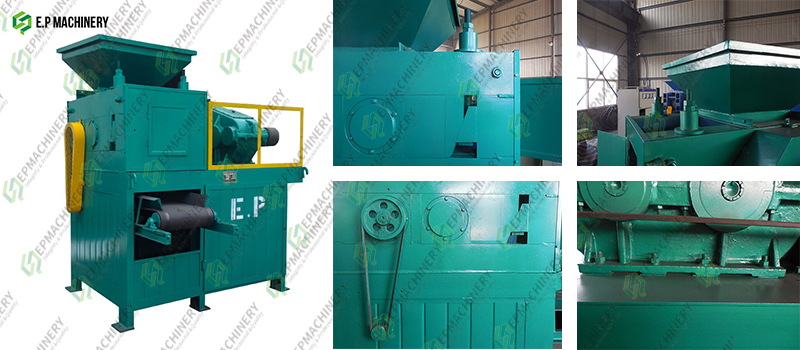
Features and Advantages
- Shapes: round, oval, or cubic
- EP roller press achieves >95% compression rate, hardness 75-90 kg/cm²
- Capacity: 1-25 t/h
Finished Briquettes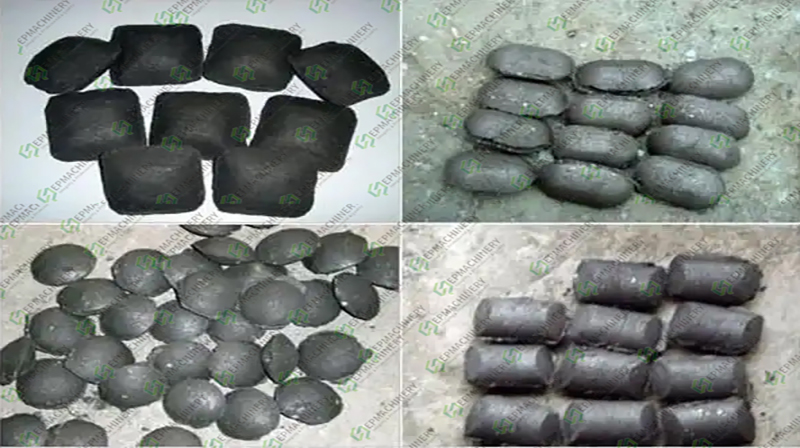
Finished briquettes from the machine
2. Hydraulic Coal Briquette Machine
Applies much higher pressure than ordinary briquette presses. Suitable for coal powder with low moisture and low/no binder content.
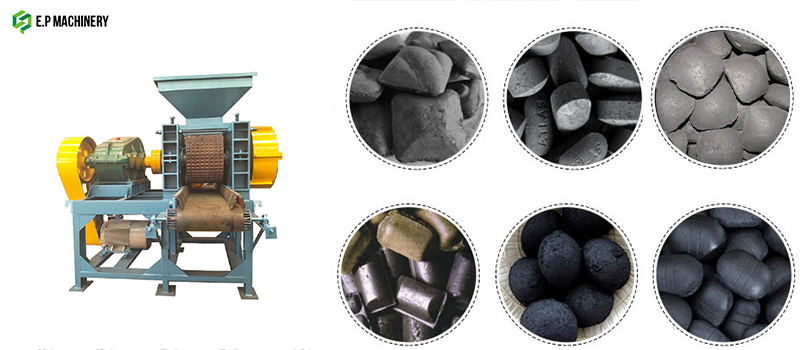
Hydraulic press and briquettes
Features and Advantages
- Shapes: square, round, oval, cylindrical, loaf, pillow, etc.; customizable
- Equipped with hydraulic system for stable high pressure; suitable for coal, coke, DRI, and mineral powders
- Capacity: 1-35 t/h
Customizable Hydraulic Press Mold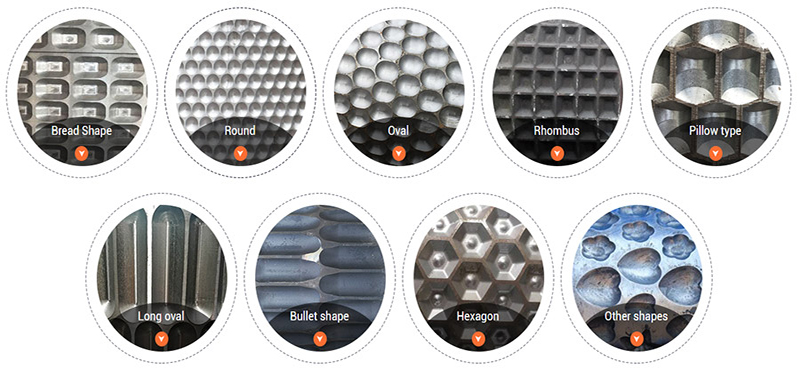
3. Coal Briquette Extruder
Also called a charcoal/coal block forming machine. Uses screw extrusion to mix powder and binder into high-density briquettes of various shapes.
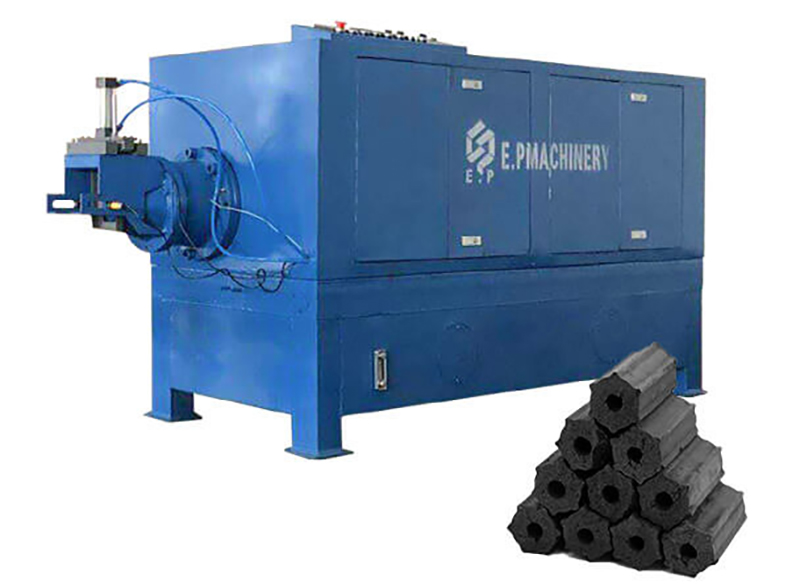
Coal briquette extruder
Features and Advantages
- Shapes: stick (BBQ), cube (hookah)
- High density, smooth surface, uniform length
- Capacity: 400-500 kg/h; 800-1000 kg/h
Briquettes Produced by Extruder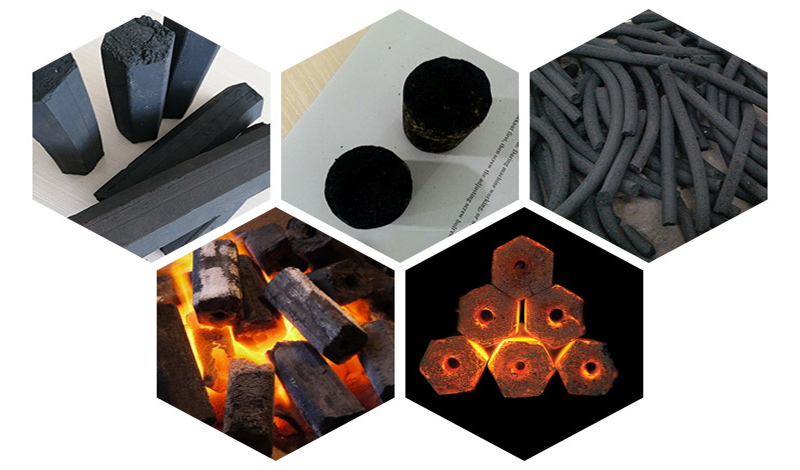
Briquettes produced by the extruder
4. Honeycomb Briquette Machine | Perforated Coal/Charcoal Press
Produces hexagonal or cubic briquettes through interchangeable molds.
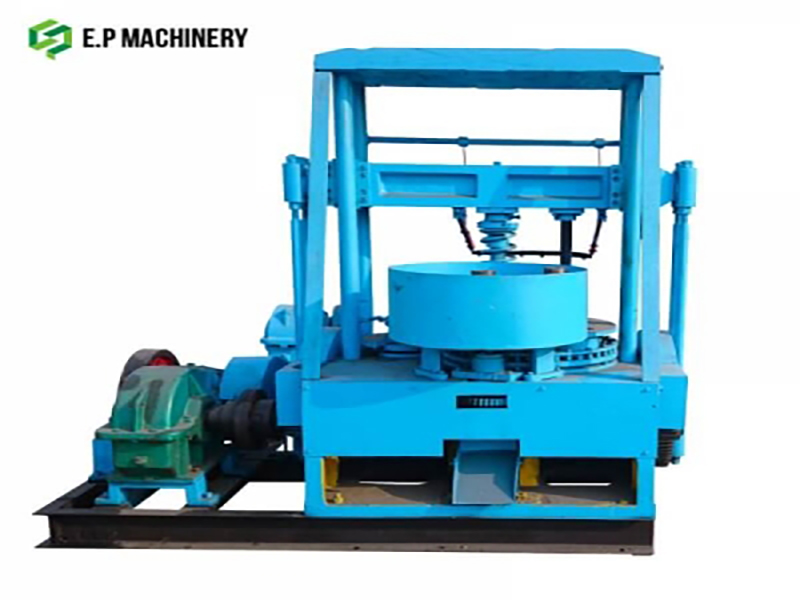
Honeycomb and perforated briquette machine
Features and Advantages
- Shapes: hexagonal and cylindrical
- HSMQ series suitable for standalone machines or large production lines
- Capacity: 3000-5000 pcs/h
Honeycomb Briquettes Produced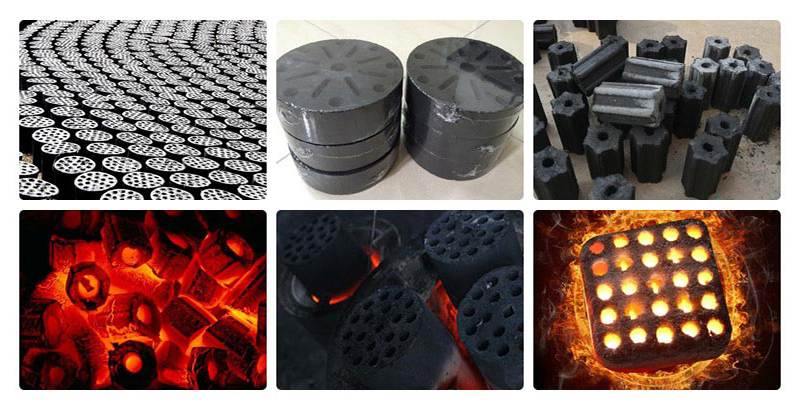
Honeycomb briquettes produced
5. Solid Round Briquette Machine
Ideal for producing high-pressure briquettes with low/no binder, similar to hydraulic roller presses.
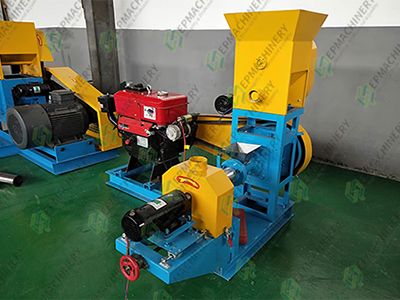
Solid round briquette machine
Features and Advantages
- Shapes: cylindrical, hexagonal prism, square prism
- Reinforced water-cooling system for continuous operation
- One machine handles multiple raw materials and sizes; forming and pressing in a single unit
- Capacity: 8mm: 800 kg/h; 10-22mm: 0.9-1.2 t/h; 70-75mm: 1.2-1.5 t/h
Briquettes Produced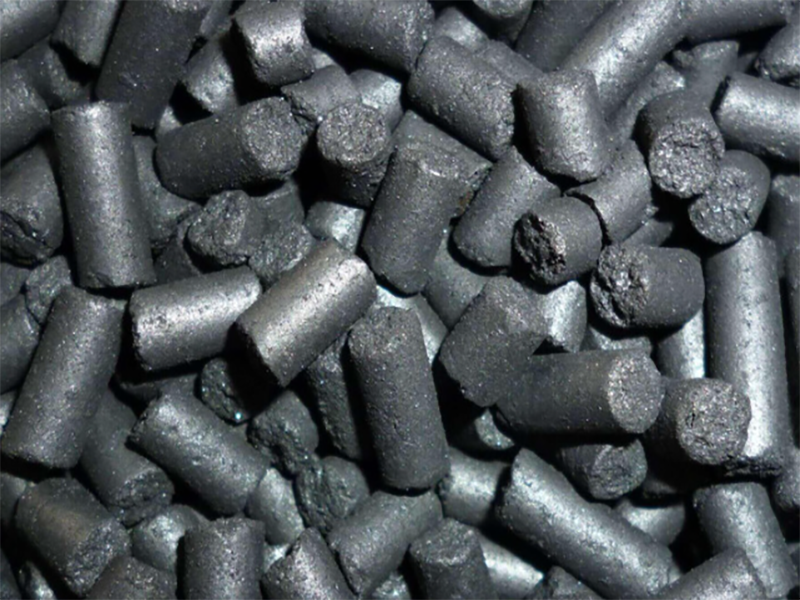
Briquettes produced by the solid round machine


